lifestyle
Getting Around Stockholm: Tips and honest recommendations from locals who live it daily
Navigating the Swedish capital requires more than just a transit card; it demands an understanding of the city's unique geography and infrastructure.
How we reported this
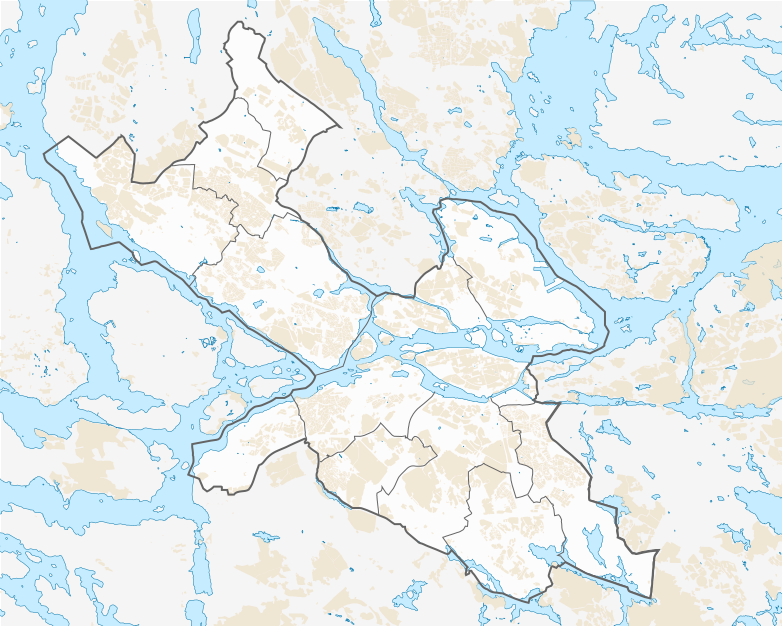
Stockholm’s transport network remains the backbone of daily life for residents moving between the city’s fourteen islands. While tourists often lean on the central hub at T-Centralen, those who live here daily know that efficiency relies on timing and a preference for the city’s expansive ferry and rail systems.
Understanding the nuances of the Storstockholms Lokaltrafik (SL) system is essential for any daily commute. As summer temperatures rise and foot traffic increases across districts like Gamla Stan and Södermalm, locals prioritize the use of the green line of the Tunnelbana over surface streets to avoid the congestion that inevitably builds near Hornsgatan and the busy intersections of Norrmalm.
Mastering the Waterways and Rail
The most effective way to cross between Södermalm and the northern districts remains the Djurgården ferry. Departing from Slussen, the service offers a practical alternative to the sometimes crowded bus routes winding through the city center. Meanwhile, the commuter rail, known as the Pendeltåg, connects the outer suburbs directly to Odenplan and Stockholm City, providing a streamlined experience for those traveling from further afield.
For those navigating the city on two wheels, Stockholm’s cycling infrastructure continues to expand. Dedicated paths along Västerbron offer some of the most reliable passage during peak hours, bypassing the stop-and-go traffic of the inner city streets. Residents often use the regional bike-sharing programs to bridge the gap between the subway stations and final destinations, particularly in neighborhoods like Vasastan where street parking is strictly limited.
As of July 2026, the standard adult fare for a single trip via the SL app remains a point of focus for regular commuters managing their monthly transport budgets. While the price of a single ticket is set at 42 SEK, most residents utilize the 30-day pass, which currently costs 1,020 SEK, to maintain cost-efficiency. These figures are published directly by SL and reflect the current fare structure implemented across the network.
Looking ahead, the city continues to focus on the expansion of the subway lines, with ongoing work impacting transit patterns near Nacka and Barkarby. Practical advice from regular commuters is simple: always check the SL app before departing, as track maintenance or minor signal issues can disrupt service on the red and green lines without significant prior notice. Planning for extra travel time during the early morning rush remains the best defense against unforeseen delays.