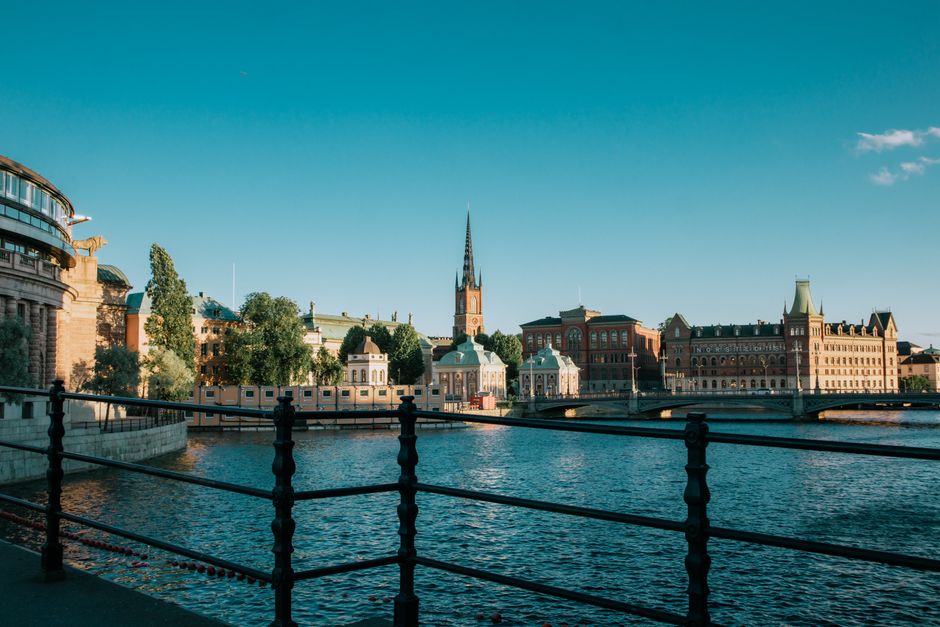
Stockholm ranked first among European capitals for sustainable digital infrastructure investment in the first half of 2026, according to figures released last month by the Nordic Innovation House — a milestone that reflects years of deliberate policy layering rather than any single breakthrough moment. The city has attracted roughly 14.2 billion kronor in green-tech venture funding since January 2025, outpacing Berlin and Amsterdam in the same period.
The timing matters. With Khamenei's funeral drawing global attention to geopolitical fault lines, with heat emergencies forcing Fourth of July cancellations across the eastern United States, and with international climate commitments fraying at the edges, cities are under mounting pressure to show that urban sustainability tech can deliver at scale — not just in pilot schemes. Stockholm, population 975,000, is one of the few places that can point to infrastructure actually running, not just planned.
The Hammarby Model Goes Regional
The neighbourhood of Hammarby Sjöstad remains the clearest proof of concept. Built on a former industrial wasteland southeast of Södermalm, the district was designed in the 1990s around a closed-loop system that converts household waste into biogas, heat, and electricity for its 25,000 residents. What's changed in 2026 is the data layer sitting on top of that physical infrastructure. The Stockholm Exergi energy company — jointly owned by the city and Fortum — began deploying AI-driven load-balancing across the district's heat network in March, shaving peak-demand costs by an estimated 11 percent during the unusually cold February the city experienced.
Across town in Kista, the science district that sits roughly 12 kilometres north of Gamla Stan along the E4 motorway corridor, a different kind of density is accumulating. The area is home to more than 1,000 tech companies, including Swedish units of Ericsson and Nokia, plus a cluster of smaller firms working on edge computing and 5G mesh architecture. The Kista Science City organisation confirmed in June that data centre capacity in the district expanded by 340 megawatts over the past 18 months — much of it cooled using recovered heat pumped back into the Stockholm district-heating grid, a circular arrangement that few other European tech hubs have managed to replicate at this scale.
What Actually Makes This Different
The honest answer involves procurement rules as much as engineering. The City of Stockholm's own climate budget — approved at 2.1 billion kronor for the 2025-2027 period — requires that any municipal digital contract above 500,000 kronor include a lifecycle carbon assessment. That single procurement clause has forced suppliers to engineer differently, and it has created a domestic market for green-certified hardware and software that startups can reference when pitching to clients in Frankfurt or Singapore.
Sthlm Startups, the accelerator running out of a converted warehouse near Slussen, counted 38 active cohort companies working on urban-tech problems as of June 30. Fourteen of those are specifically focused on building-management AI — software that coordinates heating, ventilation, and electricity draw across commercial properties. One program, the Royal Seaport Smart City initiative covering the Norra Djurgårdsstaden development near Gärdet, is running live trials of dynamic building-to-grid energy trading, letting office blocks sell surplus solar back to the local network on 15-minute settlement cycles rather than annual tariffs.
The statistic city officials cite most often is the district-heating network coverage rate: 90 percent of all buildings in central Stockholm are connected to it, giving smart-energy companies an addressable market that simply does not exist in cities built around individual gas boilers or split-system air conditioning.
For anyone tracking where to deploy green-infrastructure capital over the next 24 months, the practical signal is this: Stockholm's next major procurement cycle opens in September, when the city will tender for AI-driven traffic and freight management systems linking the Värtahamnen port to E18 logistics corridors. The tender documents are expected to carry the same lifecycle-carbon requirements that have defined every major contract since 2024 — which means whoever wins will need to build to a standard that, right now, only a handful of firms globally can meet. Several of them are already based in Kista.