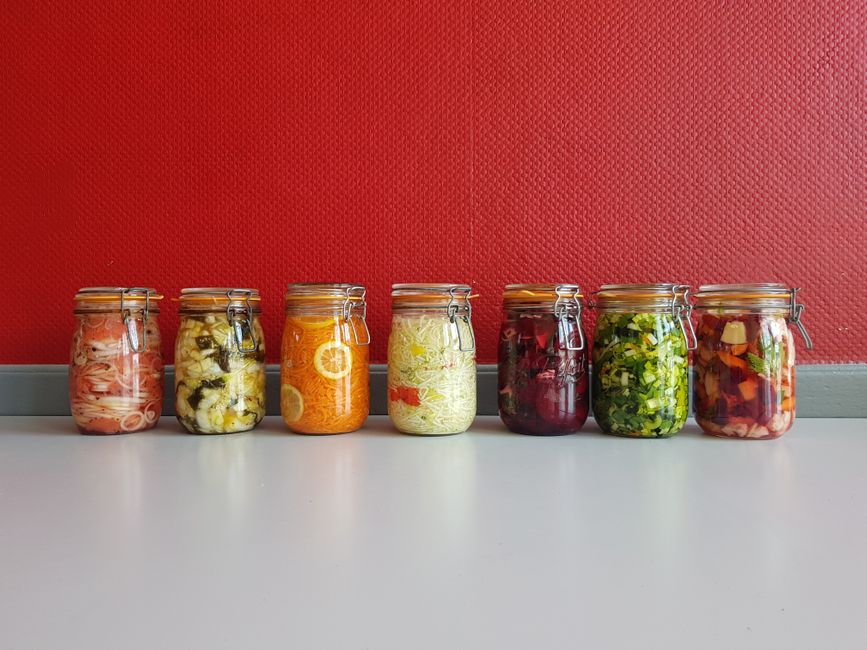
Sweden already eats fermented food for breakfast. Literally. Filmjölk — that thin, tangy cultured milk product — has sat on Swedish breakfast tables for centuries, and new research is giving the habit a serious scientific endorsement. A 2024 meta-analysis published in Cell Host & Microbe found that adults who consumed at least one portion of fermented food daily showed measurably greater gut microbiome diversity compared with those who did not, a finding that has pushed fermentation firmly into mainstream nutrition conversation across Europe.
The timing matters. Interest in gut health has surged across Scandinavia over the past two years, partly driven by a wave of new research linking intestinal microbiome health to everything from immune function to mood regulation. Swedes, already among the highest consumers of probiotic dairy in the EU, are now reaching further — into kimchi jars, kefir bottles and sourdough loaves — as the evidence base strengthens. Stockholm's active food culture means the options are unusually good for a city of 975,000 people.
Where to Find It in the City
Saluhall Östermalm, the red-brick food hall at Östermalmstorg that dates to 1888, is the obvious starting point. Several of its vendors stock traditionally produced Swedish surkål (fermented cabbage), various pickled herrings in active brine, and — since a 2023 refit expanded its artisan section — locally made water kefir. Prices run roughly 45–80 kronor for a 400g jar of surkål depending on producer, with the organic options at the higher end.
Södermalm is where the range gets more adventurous. Urban Deli on Nytorget stocks a rotating selection of European ferments, including German raw sauerkraut, miso paste from a small Gotland producer, and kombucha on draft — a rarity even by Stockholm standards. A few blocks north, Paradiset on Götgatan, one of the city's established organic grocery chains, dedicates an entire refrigerated bay to live-culture products: unpasteurised kimchi, Bulgarian-style yoghurt with active Lactobacillus bulgaricus cultures, and their own store-label kefir at around 39 kronor per litre.
For those willing to cross the water to Kungsholmen, Cajsa Warg — the specialty food shop on Hantverkargatan — carries a small but carefully curated ferment selection and regularly posts workshop dates on its social channels. The shop ran two sourdough fermentation evenings in June 2026 that sold out within 48 hours of announcement, a reasonable indicator of where local appetite sits right now.
What the Science Actually Says
The gut microbiome contains roughly 38 trillion bacteria, according to estimates from the Karolinska Institutet, Stockholm's own world-ranked medical university, which has an active microbiome research group under its Department of Microbiology, Tumor and Cell Biology. Diversity within that bacterial population is broadly associated with better metabolic and immune outcomes, though researchers are careful to note the field is still developing. What fermented foods reliably provide are live cultures that survive digestion in sufficient numbers to interact with the gut environment — a quality that pasteurised products, however labelled, cannot replicate.
Filmjölk and yoghurt remain the most accessible entry points: widely available, affordable, and culturally familiar. A 1kg tub of Arla's standard filmjölk costs around 22 kronor at ICA Maxi. Kefir — a slightly more complex ferment with a broader range of bacterial strains — costs roughly 40–60 kronor per litre and is now stocked in most Hemköp and Coop stores across the city. Kimchi and raw sauerkraut are the next step for anyone wanting non-dairy variety, and both retain active cultures provided they have not been heat-treated after fermentation — always check the label for the Swedish word opastöriserad.
The practical advice from nutritionists is to start slow, particularly if your current diet is low in fibre and fermented foods. Adding several products simultaneously can cause temporary bloating as the gut adjusts. One new fermented food per week, alongside adequate water intake, is a sensible pace. Stockholm's food scene makes that kind of gradual exploration genuinely enjoyable — there is enough variety here to spend months working through options without repeating yourself. And for anyone with specific digestive concerns, a consultation with a dietist registered with the National Board of Health and Welfare remains the right first call before making significant dietary changes.