News
Stockholm Residents Demand Say as Street Art Vanishes From Neighborhoods
From Södermalm to Rinkeby, community members are demanding a say in what replaces the artwork vanishing from their walls.
4 min read
Updated 8 h ago
News
From Södermalm to Rinkeby, community members are demanding a say in what replaces the artwork vanishing from their walls.
4 min read
Updated 8 h ago
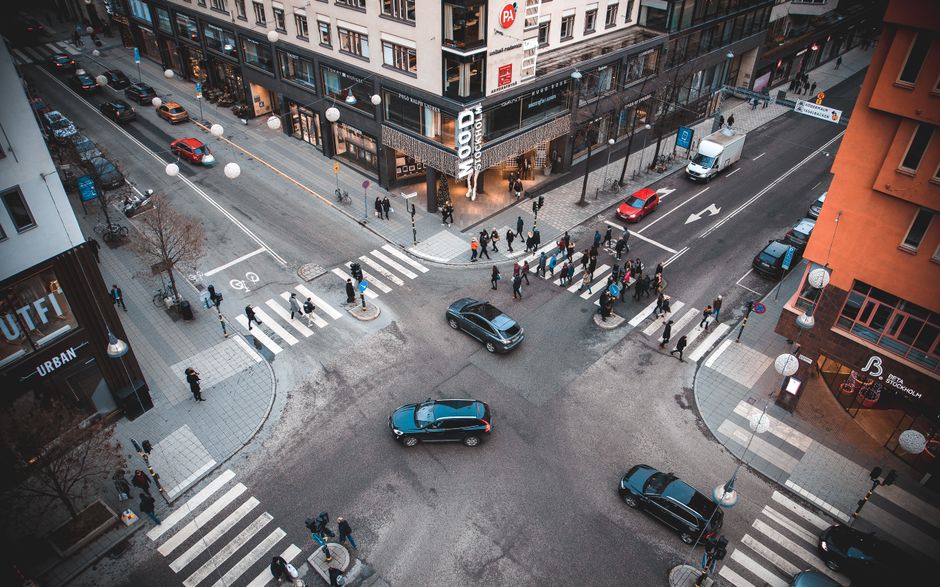
A quiet but deepening dispute over the replacement of duplicate and unauthorised images on Stockholm's public walls has drawn sharp responses from residents across the city, with community members in at least four districts saying they were not consulted before murals and printed images were removed or painted over by municipal crews.
The controversy centres on a Stadsbyggnadskontoret, the City Planning Office, programme that began enforcing stricter guidelines on repeated or unlicensed imagery in public spaces from January 2026. The policy, updated under the city's revised Plan- och bygglagen interpretation, targets what officials define as commercial duplication: cases where the same image, often a printed vinyl or wheat-paste reproduction, appears on multiple facades without individual site permits. Critics say the enforcement net has dragged in community murals alongside genuinely commercial advertising.
On Hornsgatan in Södermalm, a 12-metre mural depicting the neighbourhood's working-class history, installed in 2019 through a partnership between local arts organisation Kulturföreningen Färg & Form and the district council, was whitewashed in March after being flagged as a duplicate image. A near-identical reproduction had apparently been stencilled onto a wall in Vasastan the previous autumn. Under the new enforcement rules, both were removed. Residents say no notice was posted before the crews arrived.
In Rinkeby, members of the Rinkeby Cultural Centre's youth programme spent six weeks in the summer of 2024 creating a series of panels depicting local figures and landmarks. Three of those panels, which shared a design template used across the series, were covered over in May 2026. The centre has since filed a formal complaint with Södermalm and Spånga-Tensta district boards respectively, but has received no written response as of 4 July.
The pattern repeats in Hammarby Sjöstad, where a set of environmental-themed prints commissioned by the local residents' association Hammarby Sjöstads Samfällighetsförening was removed after city surveyors identified two identical panels facing the same canal path. Residents describe showing up one morning to find bare grey concrete where the panels had been since 2022.
Stockholm's Trafikkontoret handled 214 formal removal orders related to unlicensed public imagery in 2025, up from 147 in 2023, according to figures published in the agency's annual operations report for fiscal year 2025. Community arts practitioners say the acceleration reflects a policy shift rather than a genuine rise in violations. The permit fee for a single approved public image on city-owned infrastructure is currently 4,800 kronor per year per site, a cost that volunteer-run neighbourhood groups say makes legal compliance effectively impossible without external sponsorship.
Residents are not merely upset about aesthetics. Several community members across Södermalm, Rinkeby, and Hammarby Sjöstad have raised the point that the images removed were never purely decorative. They functioned as wayfinding for community events, identifiers of cultural space, and in some cases memorials. The Rinkeby panels, for example, included a portrait section dedicated to a youth football coach who died in 2023. That panel is now gone.
The replacement question is as contested as the removal itself. Where the city has offered to commission replacement artwork, some community members welcome it. Others argue that handing replacement decisions to Kulturförvaltningen, the city's culture administration, without local input simply substitutes one form of top-down image-making for another. A formal public consultation process exists under Stockholm's Medborgarbudget programme, but it does not currently cover visual infrastructure decisions in public spaces.
Residents who want to challenge a removal order can submit a written objection to their district board within three months of the removal date. The Rinkeby Cultural Centre is using that process now. Community groups on Södermalm have contacted Färg & Form for support in documenting which images existed before removal, arguing that without photographic evidence the replacement debate becomes impossible to ground. Anyone who witnessed a removal and has documentation should contact their district council's kultur- och fritidsförvaltning directly, it is the body that holds both the complaint and the commissioning budget for what comes next.
News
News
News
News
About this article
Published by The Daily Stockholm
Spread the word
Daily brief
Free, in your inbox before 7am. Weekdays.