Wellness
Move First, Worry Later: The Science Behind Exercise and Anxiety Relief
Stockholm's fitness culture may be doing more for the city's mental health than any prescription pad.
4 min read
Updated 5 h ago
Wellness
Stockholm's fitness culture may be doing more for the city's mental health than any prescription pad.
4 min read
Updated 5 h ago

Regular aerobic exercise reduces clinically measured anxiety symptoms by roughly 48 percent, according to a 2023 meta-analysis published in JAMA Psychiatry — a figure that sports psychologists say is comparable to the effect size of first-line medication for mild to moderate anxiety disorders. That number is worth sitting with. For a city already deep in running clubs, cycling commutes, and cold-water dips, Stockholm may be quietly running one of Europe's more effective mass mental health experiments.
The timing matters. Sweden's Public Health Agency reported in late 2025 that anxiety diagnoses among adults aged 18 to 45 rose 14 percent between 2021 and 2024, driven partly by post-pandemic financial pressure and what researchers describe as a prolonged disruption to social routines. Across Södermalm and Vasastan, GP waiting lists for psychological support stretched beyond 12 weeks for much of last year. Exercise hasn't entered that conversation loudly enough, clinicians say — though the research keeps piling up.
The mechanism isn't mysterious. Sustained aerobic effort — running, swimming, cycling hard for 20 minutes or more — triggers a release of brain-derived neurotrophic factor, or BDNF, which essentially acts as fertiliser for neurons in the hippocampus, the brain region most ravaged by chronic stress. Cortisol levels drop measurably in the 90 minutes following moderate exercise. Heart rate variability, a reliable physiological marker of anxiety, improves with consistent training over as few as six weeks.
Stockholm's geography makes sustained movement unusually accessible. The 6.7-kilometre loop around Djurgården is flat, car-free for most of its length, and used year-round by thousands of runners. Hagaparken in Solna, just north of the city boundary, offers trail running through beech forest that researchers at Karolinska Institutet have used in studies examining nature exposure and cortisol recovery. The institute, based in Solna, published findings in 2024 confirming that green-space exercise produced faster anxiety relief than equivalent indoor effort — roughly 22 percent greater reduction in self-reported worry scores after eight weeks.
The city's infrastructure has grown around this. SATS, the gym chain with 14 Stockholm locations including its busy Kungsgatan branch, introduced a dedicated mental wellness programme called Mind & Move in January 2026, pairing low-intensity group exercise sessions with brief breathing and body-scan practices. Monthly membership runs from 499 to 699 kronor depending on tier. Stockholm Löparklubben, a free community running club that meets Thursday evenings at Medborgarplatsen on Södermalm, draws between 80 and 120 participants per session — many of whom joined specifically on a GP's informal recommendation.
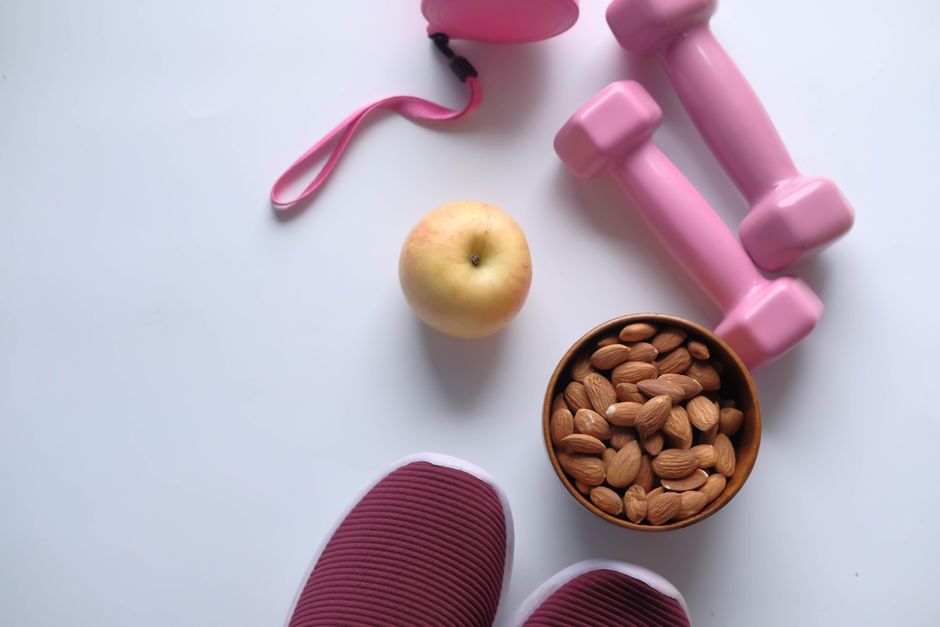
The evidence points toward specifics. Three sessions a week of at least 30 minutes each, at moderate intensity — defined as 60 to 70 percent of maximum heart rate — appears to be the threshold at which anxiety benefits become statistically consistent. Below that, improvements exist but are less reliable. Above it, particularly for people prone to anxiety, excessively intense training can temporarily spike cortisol and worsen symptoms. The sweet spot is what sports medicine practitioners call Zone 2 cardio: hard enough to limit conversation, easy enough to sustain.
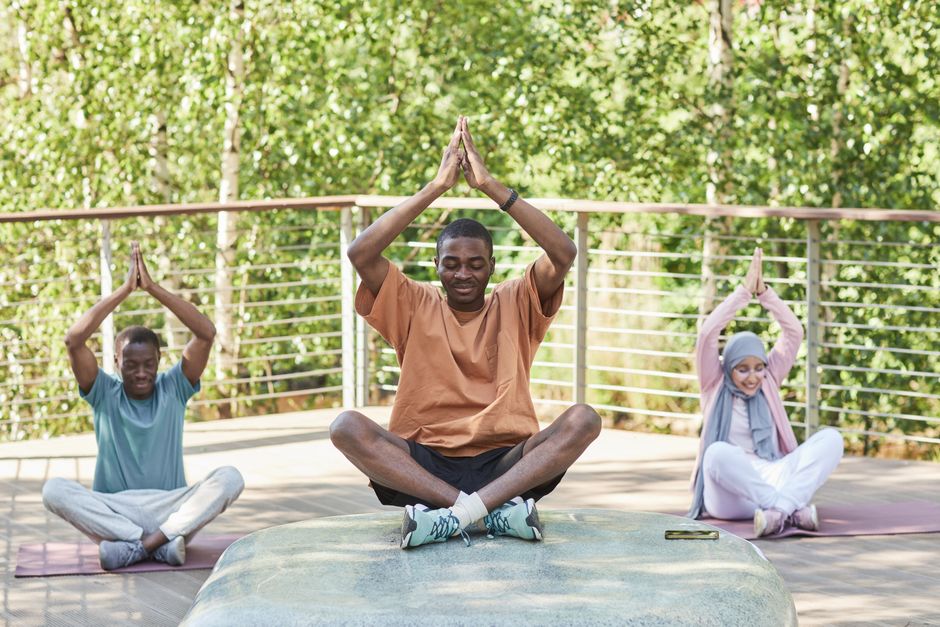
Yoga and strength training do register anxiety benefits, but the research base for aerobic exercise remains the most robust. A 2025 Cochrane review examined 97 randomised trials and concluded that walking alone — brisk, consistent, preferably outdoors — produced meaningful anxiety reduction in adults with no diagnosed disorder, as well as those managing generalised anxiety.
For Stockholm residents looking to start, the practical calculus is simpler than it sounds. The Tantolunden park in Södermalm has a 2.3-kilometre marked running path open every day. Friluftsbad, the city's network of outdoor swimming spots, includes Långholmsbadet, where early-morning swims in Lake Mälaren are free between May and September. The cost of entry, in most cases, is a pair of shoes and 30 minutes. Anyone managing diagnosed anxiety or taking medication should speak with their vårdcentral — local health centre — before making changes to their treatment plan. But the research direction is clear: the body, moved consistently, tends to quiet the mind.
Wellness
Wellness
Wellness
Wellness
About this article
Published by The Daily Stockholm
Spread the word
Daily brief
Free, in your inbox before 7am. Weekdays.
The Daily Network — local news across Australia